|
|
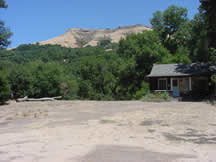
Sunol Regional Park is located off of I-680 east of Fremont.
It offers two basic programs for first through third grades. For social
sciences, native americans are studied. In science, stream study or nature
walks are available. There is no charge for use of a naturalist if schools
are from Contra Costa or Alameda Counties. Also, there is no entrance
fee or charge for busses with students from these counties as well.
Standards: First
grade standard 2 of the life sciences: This standard states,
"Plants and animals meet their needs in different ways. As a basis
for understanding this concept:
a. Students know different plants and animals inhabit different kinds
of environments and have external features that help them thrive in different
kinds of places.
b. Students know both plants and animals need water, animals need food,
and plants need light.
c. Students know animals eat plants or other animals for food and may
also use plants or even other animals for shelter and nesting.
d. Students know how to infer what animals eat from the shapes of their
teeth (e.g., sharp teeth: eats meat; flat teeth: eats plants).
e. Students know roots are associated with the intake of water and soil
nutrients and green leaves are associated with making food from sunlight.”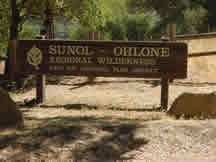
Second
grade life sciences standard 2 states, "Plants
and animals have predictable life cycles. As a basis for understanding
this concept:a. Students know that organisms reproduce offspring of their
own kind and that the offspring resemble their parents and one another.
b. Students know the sequential stages of life cycles are different for
different animals, such as butterflies, frogs, and mice.
c. Students know many characteristics of an organism are inherited from
the parents. Some characteristics are caused or influenced by the environment.
d. Students know there is variation among individuals of one kind within
a population.
 e.
Students know light, gravity, touch, or environmentalstress can
affect the germination, growth, and development of plants. e.
Students know light, gravity, touch, or environmentalstress can
affect the germination, growth, and development of plants.
f. Students know flowers and fruits are associated with reproduction in
plants."
Life sciences standards for third
grade state,"3. Adaptations in physical structure or behavior
may improve an organism's chance for survival. As a basis for understanding
this concept:
a. Students know plants and animals have structures that serve different
functions in growth, survival, and reproduction.
b. Students know examples of diverse life forms in different environments,
such as oceans, deserts, tundra, forests, grasslands, and wetlands.
c. Students know living things cause changes in the environment in which
they live: some of these changes are detrimental to the organism or other
organisms, and some are beneficial."
Third grade
social sciences standard 3.1 states," Students describe the physical
and human geography... to organize information about people, places and
environments in a spatial context. 1. Identify geographical features in
their local region (e.g., deserts, mountains, valleys, hills, coastal
areas, oceans, lakes).

Top
|
