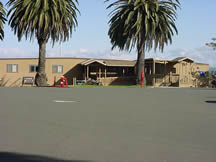
Mare Island |
|
The wetlands at the San Pablo Bay National Wildlife Refuge
on Mare Island in Vallejo are a unique environment. In addition to the
numerous varieties of wildlife that this area supports, there are also
two endangered species as well, the California Clapper Rail and the Salt
Marsh Harvest Mouse. Field trips to this site are hands on pre-set activities
run by the teacher, parents, and a docent from the wildlife refuge. In
order to take advantage of this field trip it is necessary to attend a
field trip orientation workshop. At the workshop teachers are provided
with a comprehensive wetlands guide that explains the activities and contains
everything a teacher needs for planning the field trip. Training workshops
are given at different times throughout the year. The orientation and
field trips are free of charge. For information call (707)562- 2473. Standards: First
grade standard 2 of the life sciences: This standard states,
"Plants and animals meet their needs in different ways. As a basis
for understanding this concept: Second
grade life
sciences standard 2 states, "Plants and animals have predictable
life cycles. As a basis for
understanding this concept: Life sciences standards for third
grade state,"3. Adaptations in physical structure or behavior
may improve an organism's chance for survival. As a basis for understanding
this concept: 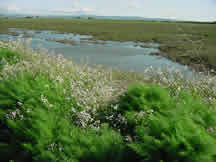 Third
grade social
sciences standard 3.1 states," Students describe the
physical and human geography... to organize information about people, places
and environments in a spatial context. 1. Identify geographical features
in their local region (e.g., deserts, mountains, valleys, hills, coastal
areas, oceans, lakes). 2. Trace the ways in which people have used the resources
of the local region and modified the physical environment (e.g., a dam constructed
upstream changed a river or coastline)." Third
grade social
sciences standard 3.1 states," Students describe the
physical and human geography... to organize information about people, places
and environments in a spatial context. 1. Identify geographical features
in their local region (e.g., deserts, mountains, valleys, hills, coastal
areas, oceans, lakes). 2. Trace the ways in which people have used the resources
of the local region and modified the physical environment (e.g., a dam constructed
upstream changed a river or coastline)."Standard 3.3 says, "Students draw from historical and community resources to organize the sequence of local historical events and describe how each period of settlement left its mark on the land. …3. Trace why their community was established, how individuals and families contributed to its founding and development, and how the community has changed over time, drawing on maps, photographs, oral histories, letters, newspapers, and other primary sources." |